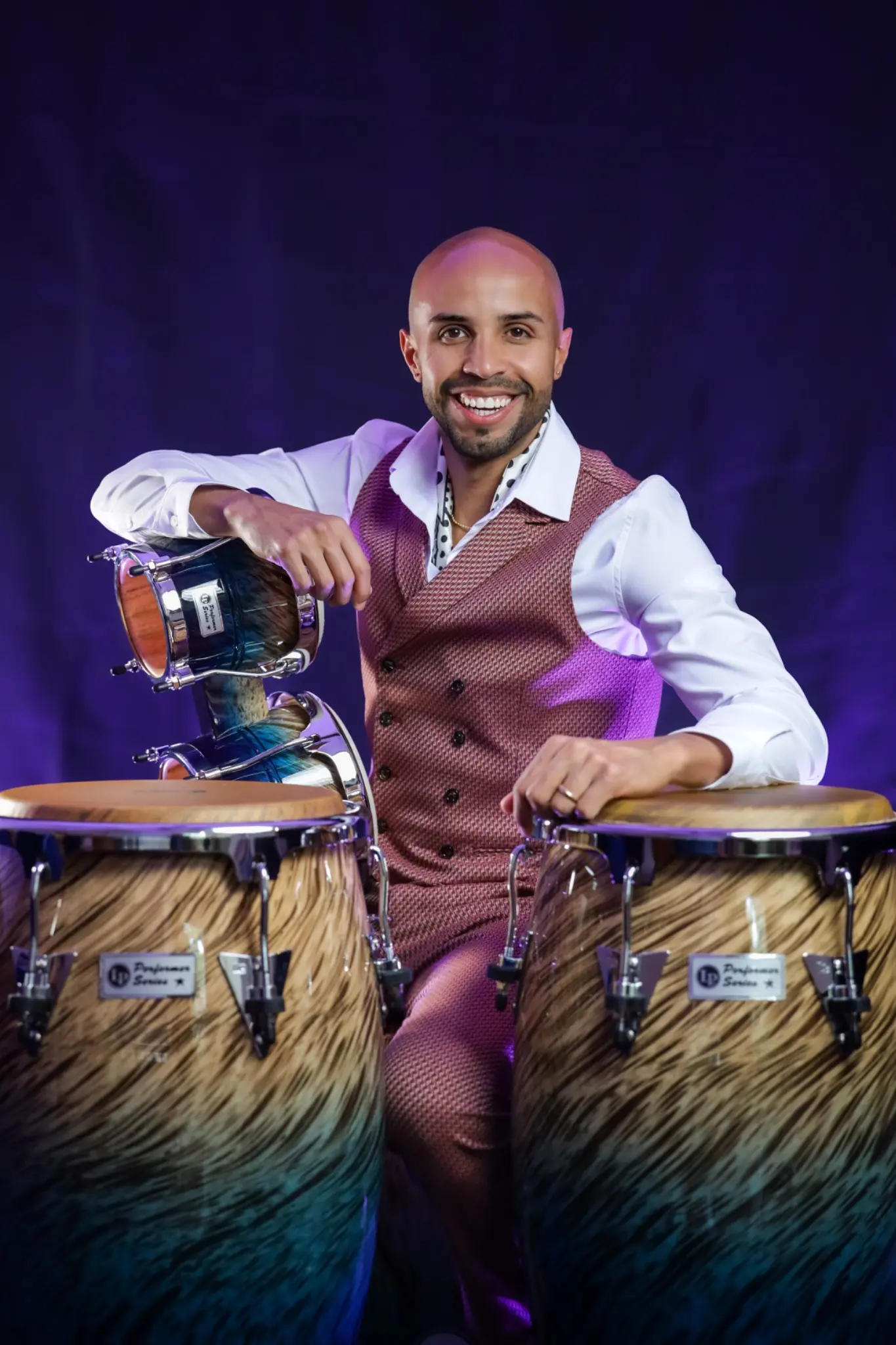
CaSuCality is Carlos Suárez’s approach to understanding the conversation
inside the music—and transforming that understanding into clear,
intentional, personal movement.
The name and the method
What is CaSuCality?
CaSuCality combines CaSu—Carlos
Suárez—with musicality. It represents his identity as
both dancer and percussionist and the method created where those two
disciplines meet.
The purpose is not to give dancers a collection of movements to place
over a song. It is to teach them how to recognize rhythm, timing,
phrasing, instrumentation, dynamics, breaks, texture, and energy—then
make informed artistic choices with the body.
“Feel the Music, Tell the Story.”
Two connected skills
Musicality and interpretation.
01
Musicality
Musicality is the ability to hear and understand what is happening
in the music: its pulse, timing, rhythmic patterns, phrasing,
percussion, melody, accents, breaks, silence, dynamics, texture, and
changes in energy.
Musicality is what you recognize.02
Interpretation
Interpretation is the artistic decision that follows. It is how you
translate what you hear into movement through timing, weight,
direction, body texture, stillness, speed, size, emotion, character,
connection, and personal style.
Interpretation is what you choose to do with it.
The complete artist
Technique gives control. Music gives direction.
Musical knowledge gives movement a reason. Technique gives the dancer
the ability to execute that reason clearly. Interpretation brings
identity, intention, and story to the result.
CaSuCality connects all three so dancers are not only capable of
moving—they understand why the movement belongs in that moment.
A common confusion
Musicality is not simply fast syncopation.
Dancing rapidly through small accents can demonstrate coordination and
rhythmic control—but speed alone does not define musicality.
Often mistaken for musicality
Filling every count with movement
Reacting to every percussion hit
Using fast footwork throughout the song
Repeating syncopation without responding to change
Musicality in practice
Recognizing when the arrangement changes
Choosing which musical layer to follow
Using contrast: motion, stillness, tension, and release
Allowing movement quality to evolve with the music
From sound to movement
The music changes. Your choices change.
A percussion entrance may inspire a sharper or more grounded response.
A sustained melody may invite length, breath, or suspension. A break may
call for stillness. A shift in dynamics may change the size, weight, or
intensity of the movement.
There is not only one correct movement for a sound. The dancer first
identifies what changed, then decides how to express it. That personal,
informed decision is interpretation—and it is what allows dancers to
tell a story instead of simply completing steps.
Carlos brings more than two decades of experience as a professional
dancer, instructor, choreographer, performer, musician, and Latin
percussionist.
His understanding of both movement and rhythm allows him to explain the
structure behind the music, the purpose behind the movement, and the
relationship between the two. CaSuCality develops dancers who can stay
grounded in timing while gaining the freedom to make clear, confident,
and individual artistic choices.